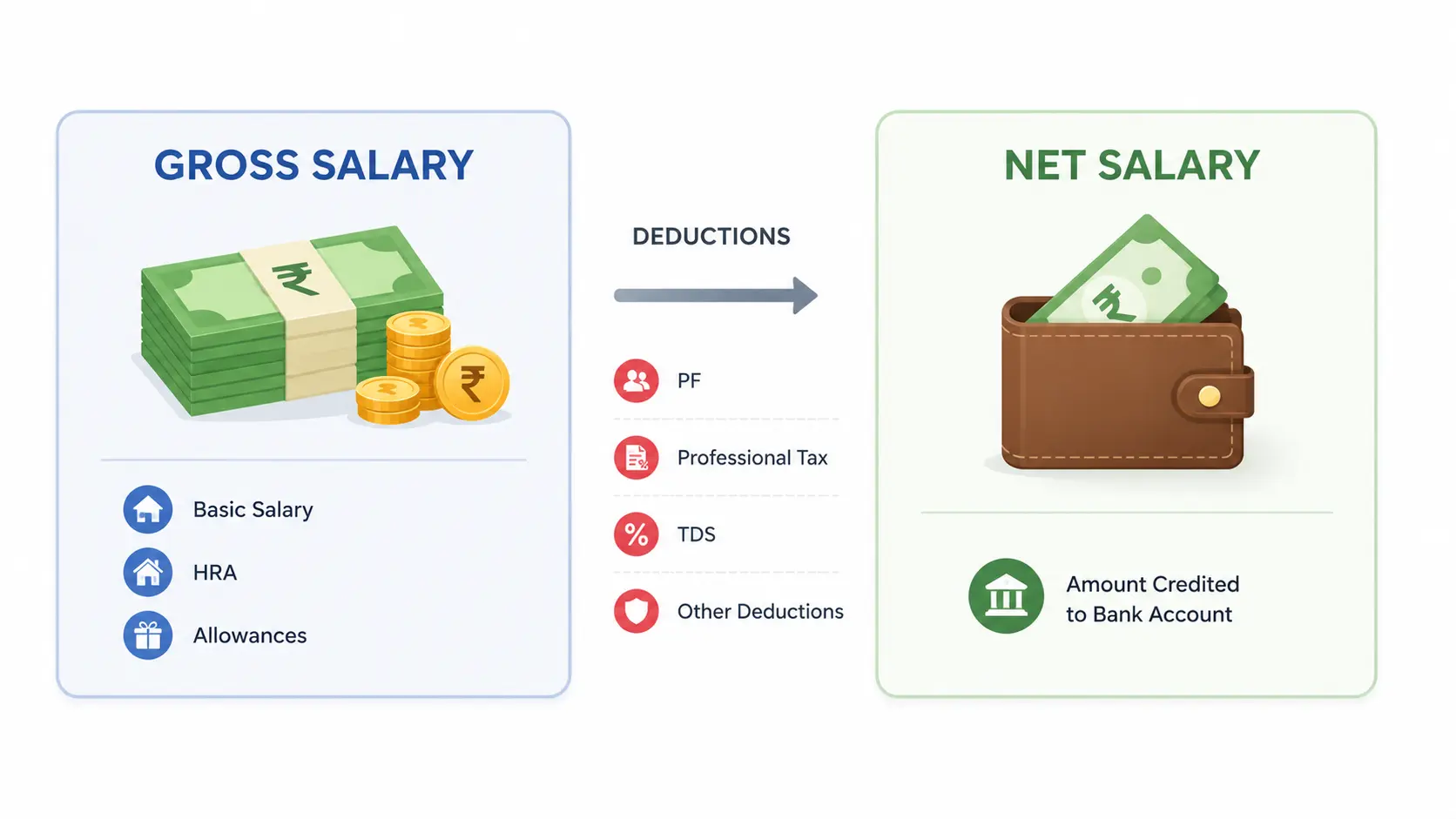
Gross salary is the total amount an employee earns before any deductions, including Basic, HRA, and allowances — while net salary is the actual amount credited to the bank account after subtracting PF, professional tax, TDS, and other deductions. The difference between the two is simply the total deductions taken out each month.
What Is Gross Salary?
Gross salary is the sum of all earning components before deductions:
Gross Salary = Basic Salary + HRA + DA + Special Allowance + Other Allowances
It does not include employer contributions like employer PF or gratuity — those sit outside gross salary, as part of CTC.
What Is Net Salary?
Net salary, also called take-home salary, is what's actually deposited into the employee's bank account:
Net Salary = Gross Salary - (Employee PF + Professional Tax + TDS + Other Deductions)
Gross Salary vs Net Salary: Example
Take an employee with a monthly gross salary of ₹60,000:
| EarningsAmount | |
| Basic Salary | ₹28,000 |
| HRA | ₹14,000 |
| Special Allowance | ₹18,000 |
| Gross Salary | ₹60,000 |
| DeductionsAmount | |
| Employee PF (12% of Basic) | ₹3,360 |
| Professional Tax | ₹200 |
| TDS (estimated) | ₹3,000 |
| Total Deductions | ₹6,560 |
Net Salary = ₹60,000 − ₹6,560 = ₹53,440
Gross Salary vs Net Salary vs CTC — Where They Fit
These three terms are often confused together:
| TermWhat It Includes | |
| CTC | Gross Salary + Employer PF + Gratuity + Insurance + Other Benefits |
| Gross Salary | Basic + HRA + DA + Allowances (before deductions) |
| Net Salary | Gross Salary − Employee Deductions (what you actually receive) |
CTC is the widest number, gross salary sits in the middle, and net salary is the smallest — and the only one that actually reaches your bank account.
Why This Distinction Matters
- For employees: understanding gross vs net avoids confusion when comparing offer letters or negotiating a raise — a higher gross salary doesn't always mean a proportionally higher take-home, since deductions scale too
- For employers/HR: getting this distinction right in payslips and offer letters prevents disputes and builds trust with new hires
- For loan/visa applications: most financial institutions ask for gross salary, not net, since it reflects total earning capacity before deductions
Quick Reference
Gross Salary = Basic + HRA + DA + Allowances
Net Salary = Gross Salary - (PF + PT + TDS + Other Deductions)
CTC = Gross Salary + Employer Contributions + Gratuity + Benefits
See also: our Salary Slip Format guide and PF in salary breakdown for the individual components behind these numbers.
Once you know the difference, our free payslip generator and CTC to in-hand calculator can do this calculation for you instantly.
Manually calculating gross-to-net salary for every employee, every month, doesn't scale. Reach out to our team at info@meagle360.com or WhatsApp us, or book a 15-minute demo to see it automated, every payroll cycle.