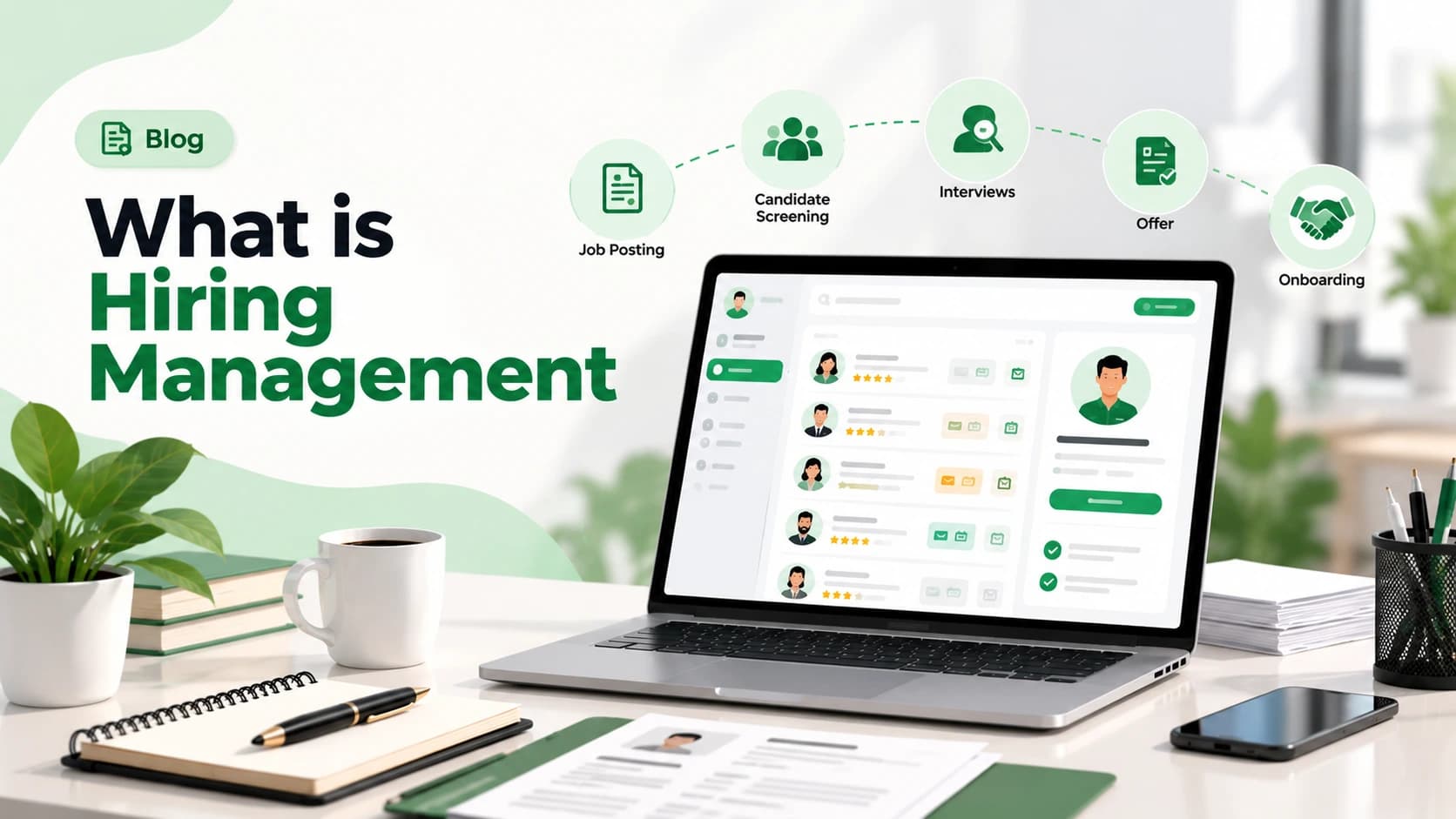
Hiring management is the process of tracking candidates from application through offer, every resume, every interview stage, every piece of feedback, so a hiring decision is based on a clear record instead of whoever's name the team happens to remember best. Most startups don't think they need this until the day two interviewers give completely different feedback on the same candidate, and nobody can find the notes from the first round to settle it.
What Hiring Management Actually Covers
Four parts, every time:
- Sourcing and intake — where applications actually land and get captured
- Stage tracking — knowing exactly where each candidate is in the process, screen, interview, offer, without asking around
- Feedback collection — interviewer notes attached to the right candidate, not scattered across individual inboxes
- Decision and offer — a clear point where the team actually decides, based on everything collected, not just whoever spoke last in a hallway conversation
Skip any of these and hiring stops being a process and becomes a series of disconnected conversations that happen to end in someone getting hired.
Why This Breaks Down Faster Than People Expect
Email and a shared doc handle hiring fine for the first few roles. It starts breaking once:
- More than one person is interviewing, and their feedback lives in separate inboxes nobody else can see
- A strong candidate goes quiet for a week because their resume got buried under 40 others in someone's inbox
- Two people on the team genuinely don't remember whether a candidate already got rejected, and reach back out, which looks exactly as disorganized as it is
- There's no clean record of why a decision was made, which matters more than people expect if a hiring decision is ever questioned later
The real cost isn't the disorganization itself, it's that candidates notice. A slow, inconsistent process is often the first real interaction a strong candidate has with your company, and it shapes whether they want the job at all.
The Three Approaches, Honestly Ranked
1. Email and a shared doc (works for exactly one role at a time)
Fine when you're hiring for one position with 10 applicants. Falls apart the moment you're running two searches at once, or more than two people are involved in decisions.
2. A spreadsheet "pipeline" (looks organized, isn't really)
Someone builds a tracker with candidate names and stages. Works until it's not updated consistently, which is almost immediately, since updating a spreadsheet is always the thing that gets skipped when someone's busy interviewing.
3. An actual hiring management system (unglamorous, but it holds up)
Every candidate has one record. Stage changes, interview feedback, and scheduling all live in one place anyone on the hiring team can check, instead of being reconstructed from memory and old emails. Our hiring management system is built around exactly this.
When to Actually Fix This
A rough signal: if you're running more than one open role at a time, or if more than two people are involved in hiring decisions, the informal approach has already started costing you candidates, not just organization. A strong hire who gets lost in the shuffle is a cost that doesn't show up on any spreadsheet, but it's real.
Once someone's hired, their information shouldn't need re-entering from scratch, see our employee database software for how that handoff works. And if you're building out this series of "startup operations basics," this is the last piece: Attendance Management 101, Leave Management 101, and Expense Management 101 cover the rest.
Still tracking candidates across email threads and hoping nothing falls through the cracks? Meagle 360 keeps every candidate, stage, and interview note in one place. Book a free demo →