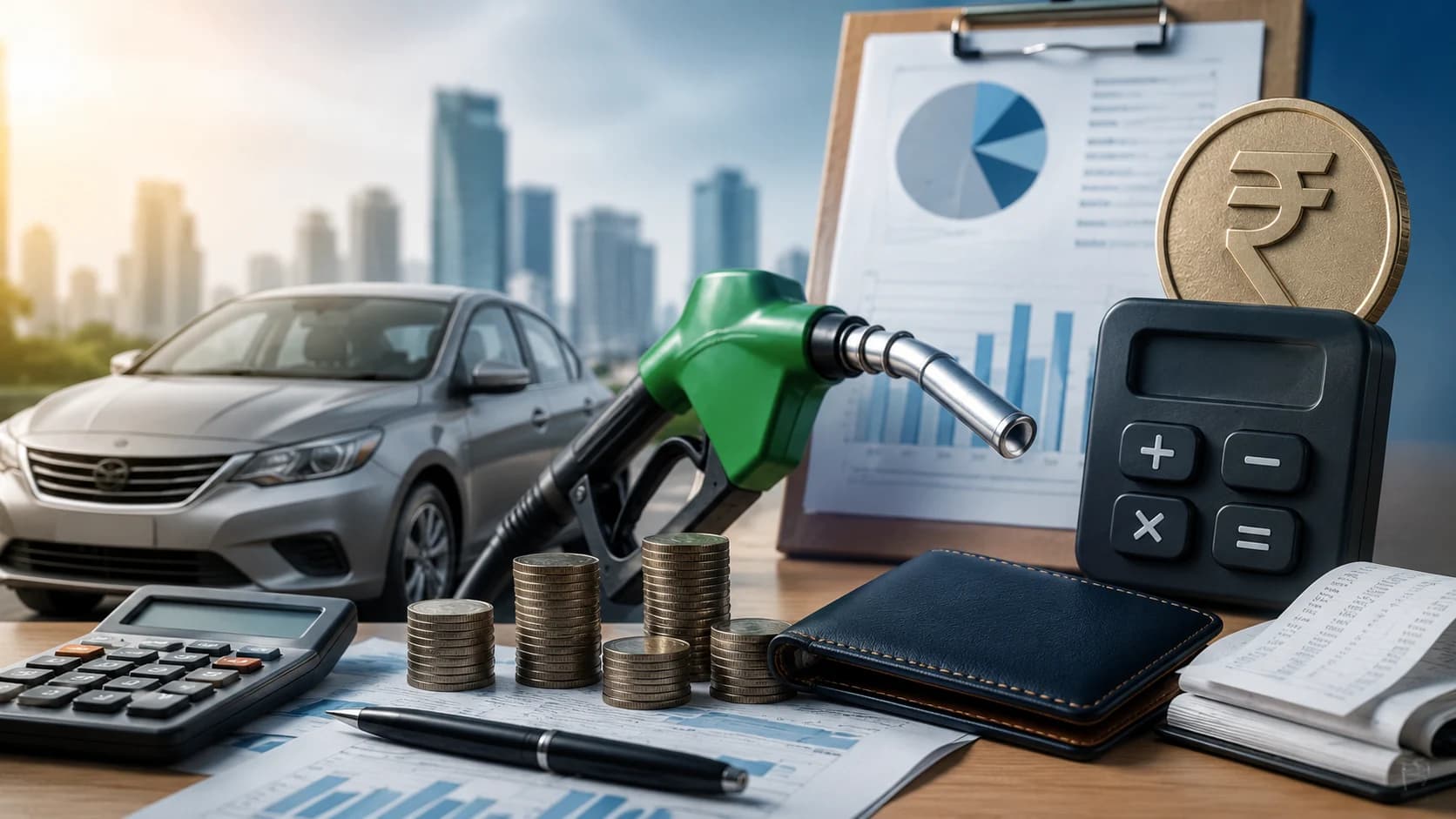
Fuel reimbursement in India is tax-free only when the vehicle is used exclusively for official work with proper logbook documentation — for mixed official-and-personal use, the CBDT's Income-tax Rules, 2026 (effective April 1, 2026) set new monthly exemption limits of ₹5,000 for cars up to 1.6 litres and ₹7,000 for cars above 1.6 litres, nearly triple the earlier ₹1,800 and ₹2,400 limits. Anything reimbursed beyond these limits gets added to taxable salary as a perquisite.
New Fuel Reimbursement Limits (FY 2026-27, effective April 1, 2026)
| Vehicle Type | Monthly Exemption (Mixed Use) | Additional for Driver |
|---|---|---|
| Engine up to 1.6 litres | ₹5,000 | ₹900 |
| Engine above 1.6 litres | ₹7,000 | ₹900 |
These figures apply when the vehicle is used for both official and personal purposes. The CBDT notified the Income-tax Rules, 2026 on March 20, 2026, nearly tripling the pre-2026 limits.
Old Limits (Before April 1, 2026, for reference)
| Vehicle Type | Monthly Exemption (Mixed Use) | Additional for Driver |
|---|---|---|
| Engine up to 1.6 litres | ₹1,800 | ₹900 |
| Engine above 1.6 litres | ₹2,400 | ₹900 |
The Three Usage Scenarios and How Each Is Taxed
1. Official use only (with documentation)
Fully exempt — no cap, no taxable perquisite — provided the employer maintains a logbook (date, kilometers, purpose, destination) and issues a certificate confirming exclusive official use.
2. Mixed use (official + personal, including home-office commute)
Taxed at the flat prescribed value shown in the tables above. Even if actual reimbursement is higher, only the excess over the limit becomes taxable.
3. Personal use only
Fully taxable — actual expenses plus 10% of the car's cost for wear and tear, minus any amount recovered from the employee.
What Documentation Is Required to Keep It Tax-Free
To claim the "official use only" nil-valuation treatment, employers need to maintain:
- A journey logbook — date, kilometers travelled, purpose, and destination for each trip
- A certificate under Rule 3(2)(B) confirming the vehicle was used exclusively for official work
- Original fuel and maintenance bills
- Records retained for a minimum of 6 years, in case of an assessment review
Without this documentation, the reimbursement defaults to the mixed-use taxable treatment even if the vehicle was genuinely used only for work.
Does This Apply to Electric Vehicles?
Yes — electric vehicles fall in the same exemption bracket as small petrol and diesel cars under 1.6 litres, with no separate EV rate under the new rules.
Does the Vehicle Need to Be Company-Owned?
No. The same exemption limits apply even when the employee owns the car outright, as long as the employer is reimbursing the running and maintenance costs.
New Regime vs Old Regime — Does It Matter Here?
Rule 3(2) valuation for fuel and car perquisites applies identically under both the old and new tax regimes — there's no difference in treatment based on which regime an employee has chosen.
Second Car Reimbursements
If an employee's family uses more than one company-linked car, only one vehicle can typically claim the nil-value official-use treatment — any additional car generally defaults to the mixed-use taxable valuation, regardless of how it's actually used.
See also: our Salary Slip Format guide and PF in salary breakdown for how other salary components are taxed.
Tracking fuel reimbursement limits, logbooks, and perquisite valuation manually for every employee is exactly the kind of compliance work that slips through the cracks. Reach out to our team at info@meagle360.com or WhatsApp us, or book a 15-minute demo to see allowance tracking and payroll compliance handled automatically.