A bonus is generally an additional payment given to employees based on company performance, individual performance, or a specific occasion, while an incentive is usually linked to achieving a defined target or performance goal. Both add to an employee's total earnings, but they work differently — and the difference matters for employees, HR teams, and payroll professionals alike.
What Is a Bonus?
A bonus is an additional payment made to an employee over and above their regular salary. A company may provide one based on company performance, individual or team performance, annual results, a festival or special occasion, employee retention, or a statutory requirement.
For example, an employee earning ₹50,000 per month may receive an annual performance bonus of ₹60,000 — separate from their regular monthly salary.
What Is an Incentive?
An incentive is a performance-linked payment designed to encourage employees to achieve a specific target or result. It's common in roles like sales, business development, customer support, recruitment, production, and marketing.
For example, a sales employee may receive ₹5,000 for hitting a monthly sales target of ₹5 lakh — the payment is directly tied to that predefined criteria.
Bonus vs Incentive: Key Differences
| Factor | Bonus | Incentive |
|---|---|---|
| Meaning | Additional payment apart from salary | Performance-linked additional payment |
| Main purpose | Reward performance or company results | Motivate employees to hit targets |
| Payment basis | Company, individual, team, or occasion | Usually specific targets or KPIs |
| Frequency | Annual, quarterly, or occasional | Often monthly or quarterly |
| Target required | Not always | Usually |
| Common example | Annual performance bonus | Sales incentive |
An employee can receive both in the same year — for instance, a ₹60,000 annual bonus tied to company performance, plus a ₹5,000 monthly sales incentive tied to hitting a specific target. One doesn't depend on the other.
Fixed Pay vs Bonus vs Incentive
These three shouldn't be confused. Fixed pay is the regular compensation an employee is entitled to under their salary structure. A bonus is an additional payment linked to company or employee performance, or given for a specific reason or occasion. An incentive is directly linked to measurable performance — targets, sales, productivity, or KPIs.
For example: ₹50,000/month fixed salary, up to ₹10,000/month sales incentive, and a ₹60,000 annual bonus. The ₹50,000 is guaranteed; the incentive depends on performance; the bonus is a separate annual payment.
How Are They Calculated?
There's no single formula for every company, but common approaches include:
Incentive = Achievement x Incentive Rate
Example: Monthly sales Rs 10,00,000 x 2% rate = Rs 20,000 incentive

Bonus = Eligible Salary x Bonus Percentage
Example: Eligible salary Rs 6,00,000 x 10% = Rs 60,000 annual bonus
Some companies use incentive slabs instead of a flat rate — for example, ₹0 below 80% target achievement, ₹5,000 at 80–99%, ₹10,000 at 100–119%, and ₹15,000 at 120% or above. The actual structure always depends on the company's compensation policy.
Are Bonus and Incentive Taxable, and Part of CTC?
Both bonus and incentive received from employment generally form part of taxable salary income, subject to applicable income-tax rules — the actual impact depends on the employee's total taxable income, deductions, and tax regime for the year.
An incentive can also be included in CTC as a variable component — for example, ₹6,00,000 fixed CTC plus ₹1,20,000 variable incentive shown as ₹7,20,000 total CTC. But the employee may not receive the full variable amount if performance conditions aren't met, so it's worth checking whether a job offer's incentive is fixed, guaranteed, or purely performance-based.
Which Is Better: Bonus or Incentive?
There's no universal answer — it depends on what the employee values. A bonus tends to work better when the payout is substantial, tied to overall company performance, and part of a predictable annual plan. An incentive tends to work better when the employee can directly influence performance, targets are realistic, and payments come frequently. Sales-oriented roles often lean toward incentives for more frequent earning opportunities; other roles more commonly rely on periodic bonuses.
What to Check in Your Offer Letter
Don't look only at the headline CTC. Check the fixed salary, variable pay, bonus and incentive structure, performance conditions, payment frequency, eligibility criteria, whether variable pay is guaranteed, payout conditions, and what happens to it if you resign or serve notice. A ₹10 lakh CTC made up of ₹8 lakh fixed and ₹2 lakh variable is very different from a ₹10 lakh package that's entirely fixed.
How HRMS Software Helps
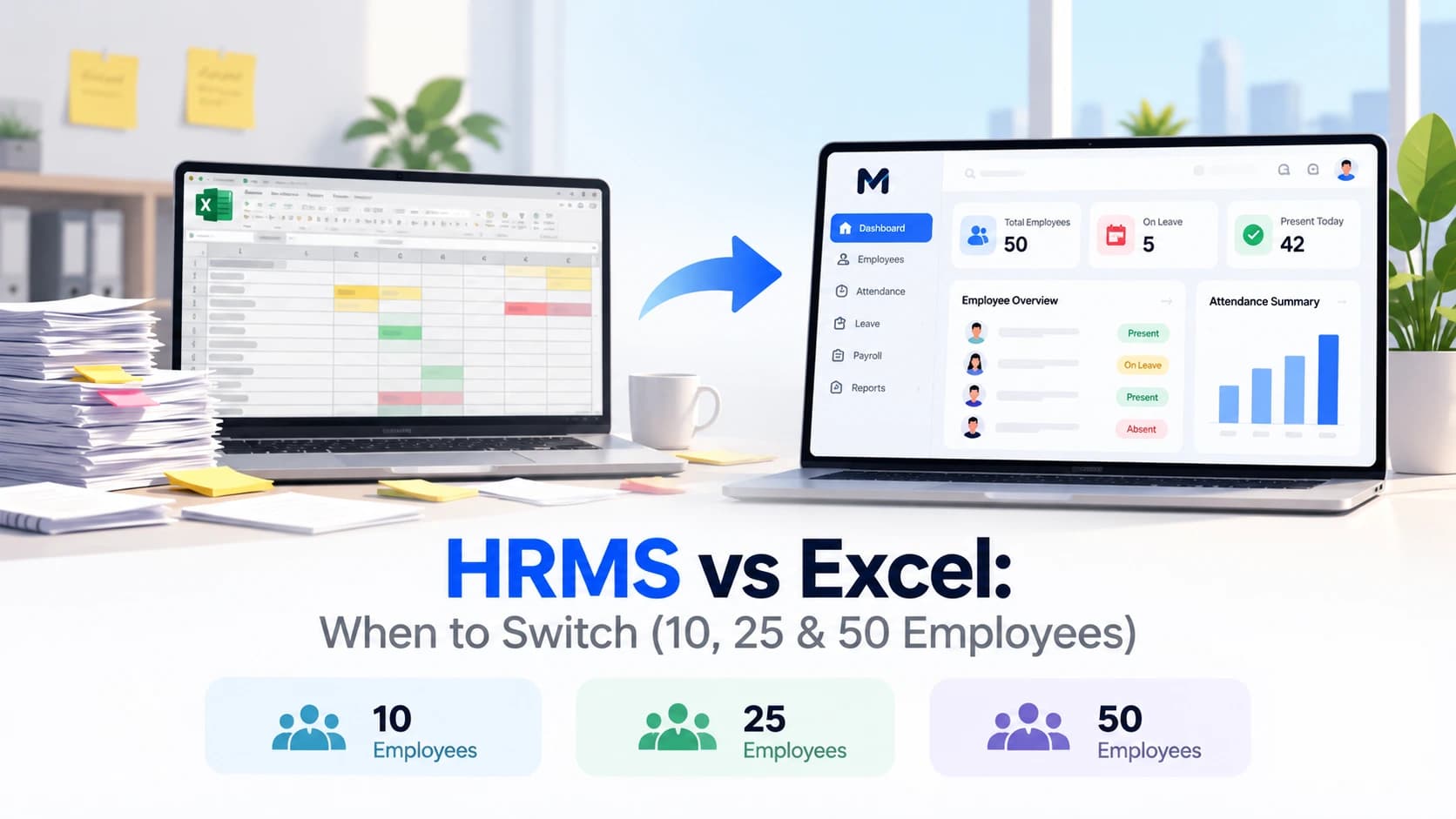
Managing bonuses and incentives manually gets difficult once employees have different targets, eligibility rules, and payout cycles. An HRMS centralizes compensation data, performance-related payouts, payroll calculations, variable pay records, salary history, and payslips — cutting down manual calculation and keeping payroll processing organized.
See also: our Salary Slip Format guide and PF in salary breakdown for how other pay components show up on a payslip.
Tracking bonus eligibility, incentive slabs, and payout cycles by hand doesn't scale as your team grows. Reach out to our team at info@meagle360.com or WhatsApp us, or book a 15-minute demo to see compensation and payroll managed in one place.