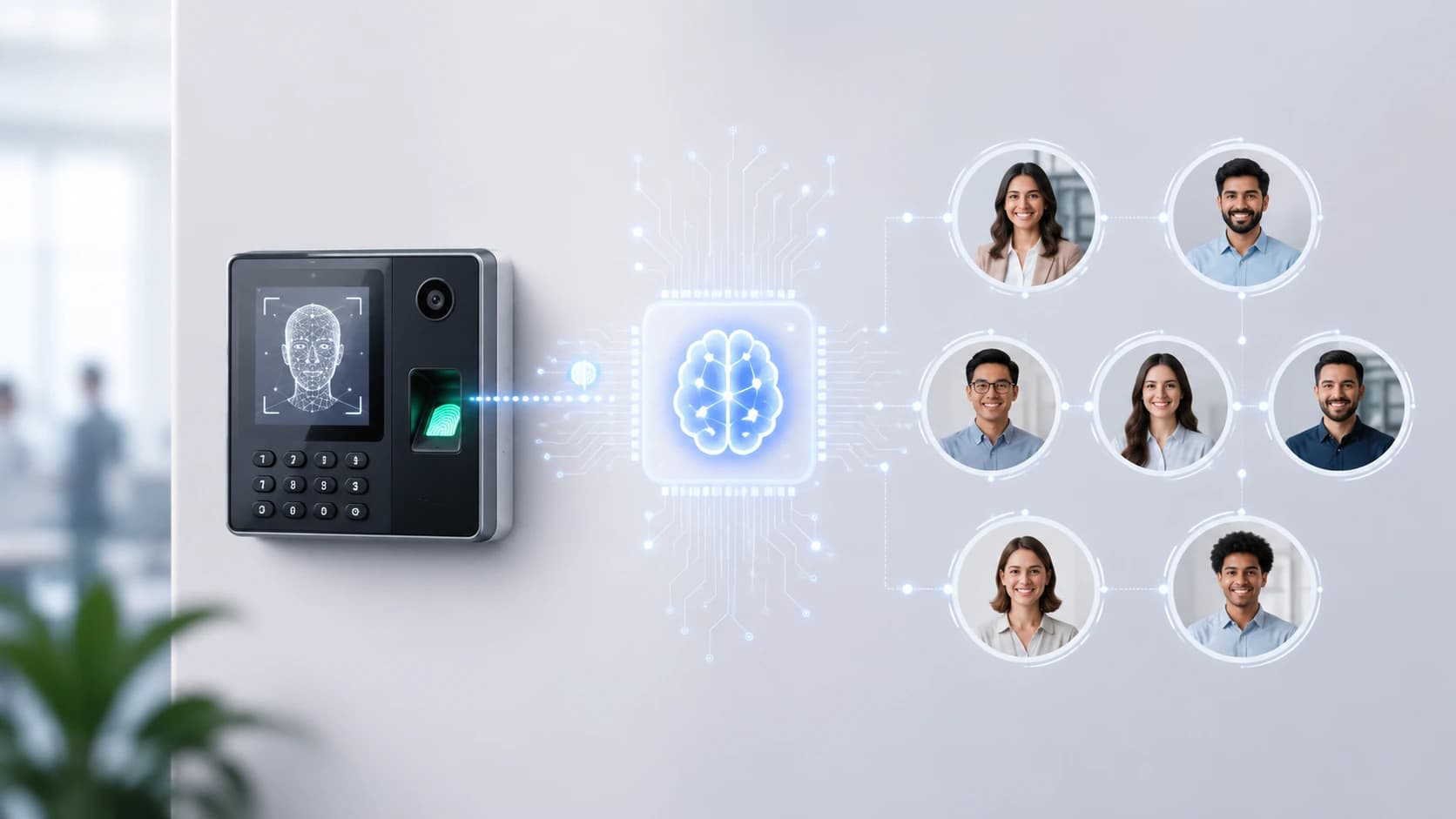
Attendance tracking used to mean a register, or at best a punch-card system that still required someone to reconcile hours by hand. AI-driven tracking changes the job from "record what happened" to "understand what happened and flag what's unusual."
Real-time, location-aware check-ins
Geo-fenced check-ins confirm that an employee is actually on-site (or at an approved remote location) at the moment they clock in, removing an entire category of manual verification that used to fall on managers.
Anomaly detection instead of manual review
Rather than someone scanning a spreadsheet for irregular patterns, anomaly detection surfaces the handful of cases that actually need attention — a sudden spike in late check-ins for one team, or a location mismatch — instead of requiring every record to be reviewed manually.
Fewer disputes, faster resolution
- Automatic timestamped records reduce "I was here" disagreements
- Managers can approve or correct exceptions in seconds instead of digging through logs
- Payroll gets clean attendance data without a manual reconciliation step
What this means for HR teams
The shift isn't about replacing judgment with automation — it's about spending human attention on the few situations that genuinely need it, instead of on routine data entry. Teams that adopt AI-assisted attendance tracking typically report the biggest time savings not in tracking itself, but in the disputes and corrections that no longer happen in the first place.
As workforces get more distributed, this kind of real-time, self-correcting attendance data is becoming less of a nice-to-have and more of a baseline expectation.