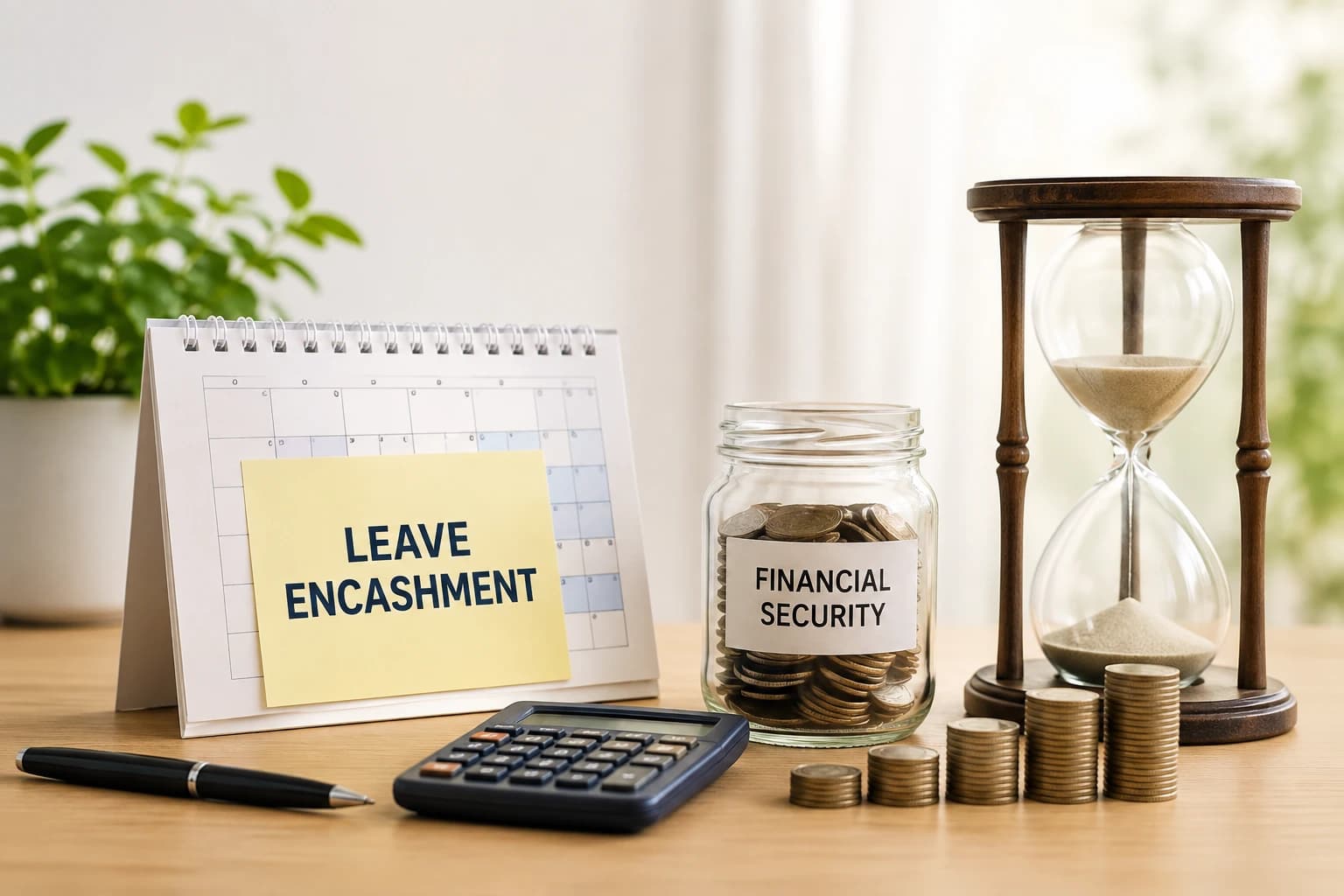
Leave encashment is the amount an employee receives in exchange for unused paid leave — instead of letting accumulated leave go to waste, the employee is paid its monetary value when permitted by the employer's leave policy or applicable rules. For many employees, it becomes an important part of their final settlement or annual compensation.
What Is Leave Encashment?
Leave encashment means converting eligible unused leave into money. Suppose an employee has accumulated 20 days of eligible paid leave but doesn't use them — if the company allows leave encashment, the employee may receive payment for those unused days according to the organization's leave policy and applicable laws.
Leave encashment can generally occur:
- During employment, if the company permits it
- At retirement or superannuation
- When an employee resigns
- During full and final settlement
- In certain other situations specified by company policy or applicable law
The exact rules depend on the type of leave, employment conditions, company policy, and applicable legislation.
How Is Leave Encashment Calculated?
There's no single calculation method that applies to every organization — companies may have their own policies for determining the amount payable. A commonly used approach is:
Leave Encashment = Eligible Salary / 26 x Number of Encashable Leave DaysFor example, if an employee's eligible salary is ₹52,000 per month and they have 15 encashable leave days:
Rs 52,000 / 26 x 15 = Rs 30,000So the employee could receive approximately ₹30,000, subject to the company's leave policy and the salary components considered for the calculation.
Important: the salary components and divisor used for leave encashment can differ between organizations. Employees should check their company's leave policy or HR documentation for the applicable formula.
Is Leave Encashment Taxable in India?
The tax treatment depends on when it's received and the employee's category. For employees covered by the relevant tax provisions, leave encashment received at the time of retirement or superannuation may qualify for an exemption, subject to applicable conditions and statutory limits.
Leave encashment received during employment, on the other hand, is generally treated differently for tax purposes and may be taxable according to applicable income-tax rules. Since tax rules and exemption limits can change, employees should refer to the latest provisions applicable to the relevant financial year.
Leave Encashment During Employment vs Retirement
The tax treatment can differ depending on when the amount is received:
| Situation | General Tax Treatment |
|---|---|
| Leave encashment during employment | Generally taxable |
| Leave encashment at retirement (government employees) | Generally exempt, subject to applicable rules |
| Leave encashment at retirement (non-government employees) | Exemption may be available subject to prescribed conditions and limits |
Receiving leave encashment while working and receiving it as part of retirement benefits should not be treated as exactly the same for tax purposes.
How Many Leaves Can Be Encashed?
There's no universal number of leaves that every employee in India can encash. The number of leaves that can be accumulated or encashed depends on factors such as:
- Company leave policy
- Type of leave
- Applicable labour laws
- State-specific rules
- Employment contract
- Organization's leave accumulation limits
For example, earned or privilege leave may have different accumulation and encashment rules than casual or sick leave. See our Leave Policy in India guide for a full breakdown of leave types.
Is Leave Encashment Part of CTC?
Usually, leave encashment isn't the same as a regular monthly salary component. However, some organizations may account for potential leave-related liabilities while preparing their compensation structures or financial provisions. The actual amount received by an employee depends on the organization's policy and the employee's accumulated eligible leave.
What Happens to Unused Leaves When You Resign?
When an employee resigns, the treatment of unused leaves depends on the company's policy and applicable regulations. If the relevant leave is eligible for encashment, the amount may be included in the employee's full and final settlement.
Employees should therefore check:
- Their available leave balance
- Which leave types are encashable
- The company's calculation method
- Applicable tax treatment
- The expected payment timeline
See also: our Salary Slip Format guide and PF in salary breakdown for how other final-settlement components are calculated.
Calculating leave encashment correctly during resignations, retirements, and full-and-final settlements shouldn't mean rebuilding a spreadsheet every time. Reach out to our team at info@meagle360.com or WhatsApp us, or book a 15-minute demo to see leave balances and settlements handled automatically.