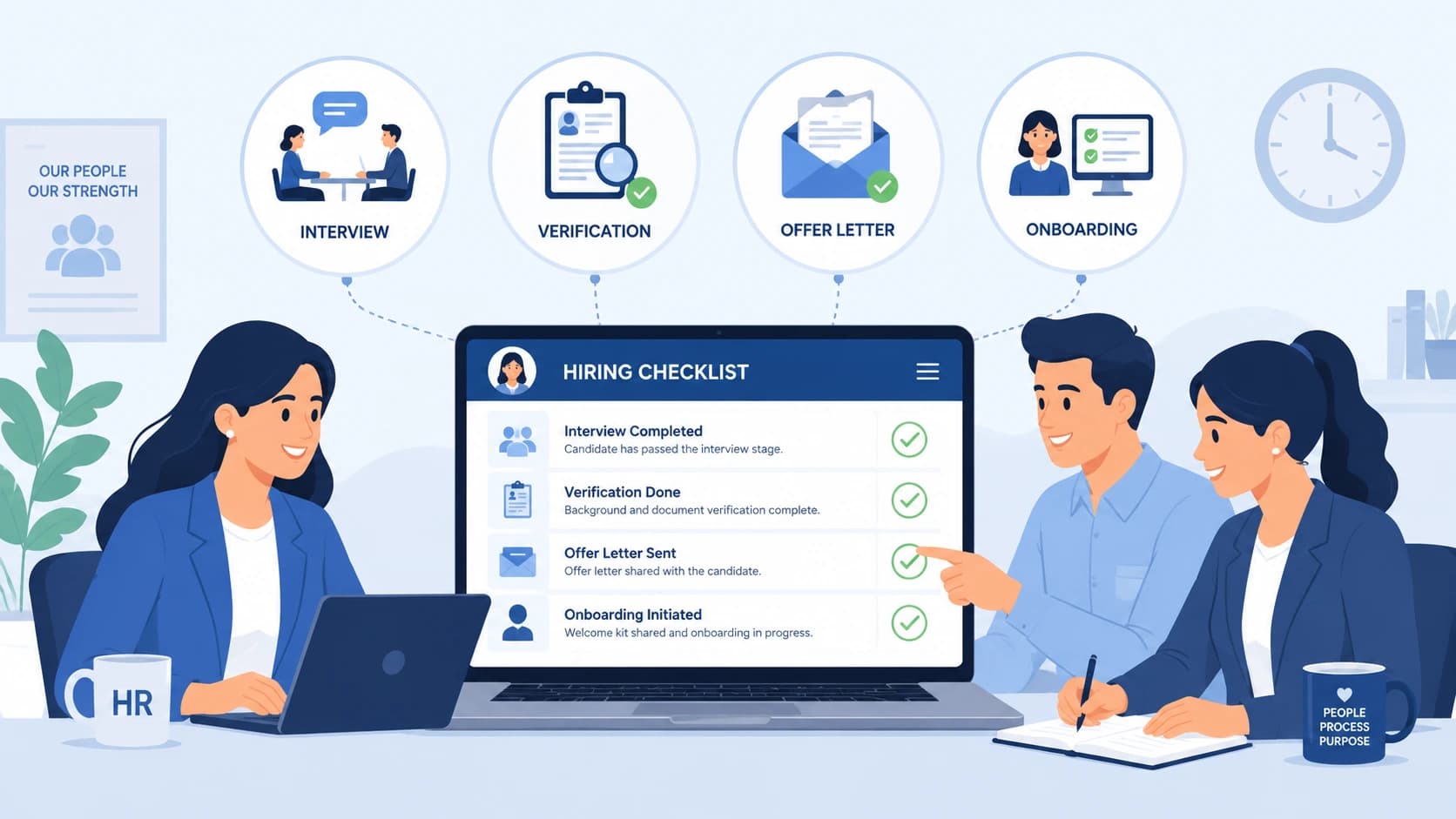
Hiring is not just about posting a job and picking the best resume. Companies that hire well and hire fast follow a structured process every single time.
If your team is still relying on scattered spreadsheets, WhatsApp groups, and endless email threads to hire, chances are you're losing good candidates.
You're also wasting hours on repetitive admin work that a proper process could eliminate. Here are the 7 hiring processes every growing company must have in place.
1. A Clear Job Description and Role Definition
- Get internal alignment before posting the job
- Define required skills, experience, and reporting structure
- List clear success metrics for the role
- Avoid vague JDs — they attract the wrong candidates
- Save your recruiter's time by cutting down mismatched applications
2. A Structured Application and Screening Process
- Route every application into one central place, not five inboxes
- Set defined screening criteria before applications start coming in
- Use a shortlisting checklist for consistency
- Prevent good candidates from slipping through the cracks
- Avoid wasting interview slots on unqualified applicants
3. A Consistent Interview Process
- Use the same interview stages for every candidate applying for the same role
- Apply the same evaluation parameters across all interviewers
- Score candidates on a common, standardized scale
- Reduce bias in hiring decisions
- Make final decisions faster and easier to justify
4. Background and Reference Verification
- Verify education history before onboarding
- Confirm employment history with previous employers
- Check references provided by the candidate
- Avoid costly bad hires
- Reduce compliance and legal risks down the line
5. A Documented Offer and Approval Process
- Use a standardized offer letter template
- Set up a clear approval chain (no dependency on one manager's memory)
- Avoid manual edits to Word documents each time
- Prevent errors and delays in offer rollout
- Reduce awkward renegotiations caused by inconsistent offers
6. A Defined Onboarding Workflow
- Plan the new hire's first week in advance
- Prepare documentation and paperwork ahead of joining
- Allocate assets (laptop, ID card, tools) before day one
- Schedule policy briefings and team introductions
- Avoid a weak first impression — a top reason new hires quit early
7. Centralized Employee Data Management
- Store offer letters, documents, and verification records in one system
- Keep onboarding checklists accessible to HR at all times
- Avoid scattered files across spreadsheets and emails
- Make audits and compliance checks quick and easy
- Enable faster, more accurate HR reporting
Why This Matters
- Each step above sounds simple on its own
- Managing all seven manually — across spreadsheets, emails, and chat groups — is where companies lose time, candidates, and control over hiring data
- An all-in-one HRMS brings every step into a single system: job posting, screening, interviews, verification, offers, onboarding, and employee records
- No more chasing updates across five different tools
If HR at your company still runs on spreadsheets and group chats, it is worth 15 minutes of your time to see what an all-in-one HRMS can do.
Book a free demo today:
📞 Call us: +91 80773 13241
🌐 Visit: meagle360.com
Request a free demo — 14 days, full access, no credit card required.
FAQs
1. What is a hiring process in HRMS? It's a structured set of steps job posting, screening, interviews, verification, offer, and onboarding managed within one system instead of manual tools.
2. Why is background verification important while hiring? It protects the company from bad hires, fraud, and compliance risks by confirming a candidate's education, employment, and references.
3. Can an HRMS handle the entire hiring process? Yes. A good HRMS covers everything from job posting and screening to offer letters, onboarding, and employee records all in one place.
4. How does HRMS help reduce hiring time? It automates repetitive tasks like screening, approvals, and documentation, so HR teams spend less time on admin work and more time on decision-making.
5. Is HRMS only for large companies? No. Companies of all sizes including startups and small businesses use HRMS to standardize hiring and save time as they scale.